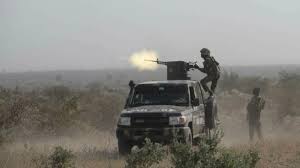












Nigeria’s military has launched a significant offensive against a new rebel group reportedly affiliated with ISIL (Islamic State of Iraq and the Levant), further complicating the country’s already challenging security landscape.
Details of the Offensive:

Region: The operation targets remote areas in Niger State and parts of the Lake Chad Basin, which have seen increased militant activity.
Military Strategy: The campaign involves airstrikes, ground troop deployments, and collaboration with local vigilante groups to dismantle the group’s infrastructure and operational bases.
Focus: Neutralizing high-value targets, disrupting supply chains, and rescuing abducted civilians held by the group.
The Rebel Group:
The group, reportedly operating under the ISIL-affiliated Islamic State West Africa Province (ISWAP), is believed to have splintered from existing extremist factions. It has been accused of conducting attacks on villages, security checkpoints, and critical infrastructure, including the destruction of telecom facilities to limit communication in affected areas.
Context:
Nigeria has long grappled with insurgencies, notably Boko Haram and ISWAP, but the emergence of a new ISIL-linked faction signals a concerning escalation. Experts believe the group may be leveraging alliances with global jihadist networks to bolster its capacity and attract foreign fighters.
Challenges:
Terrain: The dense forests and rugged landscapes provide natural cover for insurgents, complicating military operations.
Civilian Safety: Concerns remain about collateral damage, as many militants operate near civilian settlements.
Funding and Recruitment: The group is reportedly financed through illegal mining, ransom payments, and external ISIL support.
Government Response:
President Bola Ahmed Tinubu has reaffirmed Nigeria’s commitment to eliminating terrorism, emphasizing regional cooperation with neighboring countries like Chad, Niger, and Cameroon. The military has also called for increased intelligence-sharing and support from international allies.
Broader Implications:
The rise of ISIL-linked groups in West Africa underscores the region’s growing role as a hotspot for global terrorism. Analysts warn that failing to address root causes such as poverty, corruption, and ethnic tensions could perpetuate the cycle of violence.