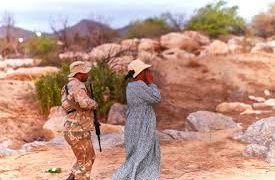













Migrants attempting to cross the South Africa-Zimbabwe border are reportedly engaged in tense confrontations with security forces, including the South African army. The Beitbridge border, a key crossing point, has become a hotspot for those seeking to escape economic challenges in Zimbabwe, with many believing that illegal entry is their only viable option.

Migrants often risk their lives navigating the Limpopo River or scaling fences, while South African authorities enforce strict border controls to curb illegal crossings. This has led to frequent clashes, highlighting the desperation of migrants and the challenges faced by authorities in managing border security.
Local residents and advocacy groups have expressed concerns about the human rights implications of the confrontations, urging governments on both sides to address the root causes of migration, such as economic instability and lack of opportunities in Zimbabwe.
The situation underscores broader issues of migration, regional stability, and economic disparity in Southern Africa, with many calling for more sustainable and humane solutions.
The economic struggles in Zimbabwe are forcing individuals like Fadzai Musindo to rely on precarious cross-border work to survive. As a “runner,” Musindo transports goods from South Africa into Zimbabwe, an essential service for many who depend on South Africa’s better-stocked markets. This work, however, comes with significant risks and challenges, especially when informal routes are taken.
For Musindo, crossing via the official Beitbridge border post is impractical. Stamping her passport daily would rapidly deplete its pages, forcing her to pay the steep $150 fee for a new one annually—an unaffordable expense for the 43-year-old mother of three. Instead, she opts for informal crossings, which are often dangerous but necessary to save money.
Her story highlights the difficulties faced by those living on the margins of Southern Africa’s economic disparity. The situation at the South Africa-Zimbabwe border reflects a broader crisis of economic instability, lack of opportunities, and the high cost of bureaucratic systems that disproportionately affect the most vulnerable.
Fadzai Musindo’s daily journey across the Limpopo River into South Africa is emblematic of the harsh realities faced by many informal workers navigating the precarious South Africa-Zimbabwe border. The river, one of Africa’s largest, serves as a dangerous and illegal crossing point facilitated by young men known as goma-gomas, who charge a small fee to smuggle people across.
Despite the risks of robbery, assault, or even crocodile attacks, Musindo explains that walking in groups offers some measure of safety. “If we walk as a group, nothing will happen to us because we are many,” she says, describing how their familiarity with the border’s informal workings ensures a certain level of tolerance from patrolling soldiers.
However, the situation has grown more perilous since the South African National Defence Force (SANDF) intensified border security through a new safeguarding operation. For migrants and runners like Musindo, the stricter patrols increase the uncertainty of their already treacherous journeys.
Once across, Musindo resumes using legal pathways to carry goods for her clients, balancing on-the-ground survival with the dangers and limitations imposed by border restrictions. Her experience highlights the desperation driving irregular migration and the informal economies sustaining countless families in the region.#newsafro_