

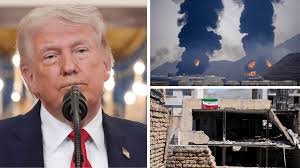










The Middle East is once again on edge as Israel launched a “wide-scale wave” of strikes targeting key regime infrastructure across three regions of Iran. The attacks come amid a surge in regional tensions that has also drawn in neighboring nations. Turkey reported that NATO air defenses intercepted an Iranian missile as it entered Turkish airspace, while Gulf countries confirmed overnight attacks on their territories.

The military escalation has sent global oil markets into a tailspin. Crude prices have surged past $100 a barrel, marking a four-year high. In response, G7 finance ministers convened to discuss the potential joint release of strategic oil reserves. Bahrain’s national oil company even declared force majeure, warning of potential disruptions to energy supplies as the conflict continues to threaten key oil sites.
Meanwhile, Iran’s leadership faces a historic transition. Mojtaba Khamenei, son of the late Supreme Leader Ali Khamenei, has been named the country’s next supreme leader. U.S. President Donald Trump has called Mojtaba an “unacceptable” choice, while Israel has vowed to target any successor linked to the regime’s military ambitions.
The human cost of the conflict is also emerging. New video footage appears to confirm a U.S. airstrike near an Iranian naval base located next to a school, raising alarm internationally. U.S. Defense Secretary Pete Hegseth said investigations are ongoing, while President Trump placed the blame squarely on Iran.
With military operations intensifying, oil prices surging, and political leadership in flux, experts warn that the region could see further destabilization in the coming days, with ripple effects felt across global energy markets and international security.#newsafro_