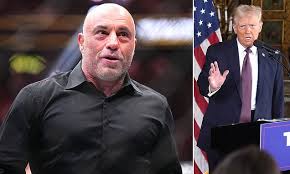













Joe Rogan recently shared his thoughts on U.S. expansion, adding to the speculation surrounding Donald Trump’s plans for Canada. After Trump proposed making Canada the 51st state, Rogan took the idea further by suggesting that the U.S. should also consider expanding southward, bringing Mexico into the fold, and even looking eastward toward Greenland.

Rogan, who has publicly supported Trump in the 2024 election, posted a photo of Trump’s Truth Social post, which detailed his desire to incorporate Canada into the United States. Rogan added a simple message alongside the post, reinforcing his belief in the potential for even more expansive U.S. territorial changes.
This new proposal from Rogan suggests a bold vision for the future, one that would involve reshaping North American borders and potentially altering the political landscape of the continent. However, this remains speculative and likely an idea for thought-provoking discussion rather than a tangible plan.
Joe Rogan amplified the conversation around Donald Trump’s recent proposal for U.S. expansion by suggesting Mexico should also join, alongside Canada. Posting on Instagram, Rogan said, “I say we let Mexico in, too,” building on Trump’s plan to make Canada the 51st U.S. state.
Trump’s Monday post claimed that many Canadians are enthusiastic about the idea of becoming part of the U.S. through “economic force.” However, this bold proposal has been met with significant resistance, particularly from Canada’s leadership. Prime Minister Justin Trudeau firmly rejected the idea, posting on X (formerly Twitter), saying, “There isn’t a snowball’s chance in hell that Canada would become part of the United States.”
What initially appeared to be playful or rhetorical remarks by Trump are now facing serious pushback from political leaders in both Canada and the U.S., as the debate over the future of North American borders continues to unfold.
Prime Minister Justin Trudeau fired back at Donald Trump’s expansionist rhetoric, highlighting the deep trade and security ties between the U.S. and Canada. Trudeau emphasized that both countries benefit from being each other’s top trading and security partners, challenging Trump’s provocative comments.
Trump’s recent remarks about using “economic force” to bring Canada under U.S. control follow a string of controversial statements, including his refusal to rule out military action to retake the Panama Canal and acquire Greenland. While Trump dismissed the notion of military intervention in Canada, he suggested economic leverage could be used to push Canada into a closer relationship with the U.S.
During a press conference at Mar-a-Lago, Trump argued that the U.S. military would have a significant role in Canada’s defense, claiming that the U.S. spends vast sums protecting the country. He also pointed to the trade deficit between the two nations, particularly in the auto industry, as evidence of an unequal relationship, despite the fact that the U.S. benefits from substantial trade with Canada.
Trump’s son, Donald Trump Jr., further fueled the narrative by visiting Greenland, signaling the administration’s interest in acquiring the territory. Despite Trump’s rhetoric, Trudeau’s swift response highlighted Canada’s commitment to its independence and the mutually beneficial relationship between the two nations.