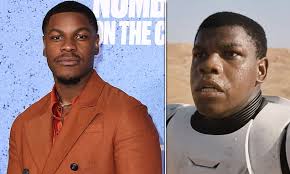

















John Boyega recently made headlines with his candid comments about his experience in Star Wars, referring to the franchise as the “whitest, elite space” and reflecting on the racist backlash he faced during his time in the series. The actor, who played Finn in the sequel trilogy, has been outspoken about the challenges he encountered, including the online abuse directed at him for portraying a prominent Black character in a major Hollywood franchise.

In an interview, Boyega shared that he felt the Star Wars universe, despite its vast scope and diverse fanbase, was rooted in an exclusionary space that prioritized certain narratives, often sidelining characters like his. He discussed the racism he faced both on and off-screen, explaining how the backlash not only affected him personally but also created a disconnect between the intentions of the filmmakers and the experiences of marginalized audiences.
John Boyega’s comments in the new AppleTV+ documentary Number One on the Call Sheet continue to spark significant discussions on race and representation in Hollywood. The 33-year-old British actor, who rose to fame for his role as Finn in Star Wars, expressed frustration over the franchise’s history of sidelining Black characters, pointing out that it was always “so White” that his presence as a Black person felt notable. He criticized how Star Wars often centered around “whitest, elite spaces,” highlighting how this limited the narrative and opportunities for actors like himself.
Boyega also criticized the backlash he received for taking on a lead role in the franchise, stating that fans were fine with Black actors in supporting roles, but once they were given more prominent parts, it seemed to trigger a negative reaction. He noted that while Star Wars fans might point to the inclusion of characters like Lando Calrissian and Mace Windu as examples of diversity, it felt like tokenism, mentioning that these characters were “just scattered in there.”
His criticisms also extended to his own character’s journey, highlighting the stark contrast between his role as Finn and the more developed arcs given to characters like Rey (Daisy Ridley) and Kylo Ren (Adam Driver). Boyega pointed out how Finn was marketed as an essential character, only to be pushed to the background in later films, particularly in The Rise of Skywalker.
Despite these challenges, Boyega acknowledged that his time in Star Wars was a pivotal moment in his career, calling the opportunity “the call that all those stars talk about that changed their life.” He emphasized the complexity of his experience, both positive and negative, and the broader conversation about diversity and representation within major franchises.
His comments also touched on the disappointment of seeing his character sidelined after initial promise, suggesting that Disney should be more mindful when introducing Black characters in prominent roles, ensuring that they are given the depth and screen time that matches the marketing. Boyega’s reflections continue to fuel important conversations about race, representation, and the need for more inclusive storytelling in blockbuster films.#newsafro_