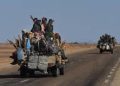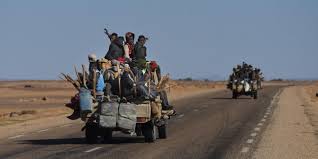

















A journey home to celebrate Eid al-Adha ended in tragedy for dozens of travelers after their truck broke down in a remote stretch of the Sahara Desert in northern Niger, leaving them stranded without water for days.

Authorities in Niger say at least 49 people died of thirst after the vehicle became immobilized in an isolated area more than 80 kilometers west of Assamaka, a key border crossing near Algeria and close to the frontier with Mali.
According to officials in the Agadez governorate, the victims were part of a group returning from Mali to reunite with their families in Niger for the Muslim holiday. However, their trip took a devastating turn when the truck suffered a mechanical failure in one of the harshest environments on Earth.
Despite repeated efforts by the driver, his assistants, and passengers to repair the vehicle, they were unable to get it running again. With no nearby supply points and temperatures soaring in the desert, the stranded travelers quickly ran out of water.
Officials described the scene discovered by rescuers as heartbreaking, with dozens of bodies found beneath and around the disabled truck. The victims were later buried in mass graves.
Amid the tragedy, two people managed to survive. Authorities said they walked more than 50 kilometers to find a water source before continuing on to Assamaka, where they alerted officials and triggered a rescue operation.
A government delegation sent to investigate learned that the truck had traveled for several days from the Malian town of Talhandek, located roughly 300 kilometers from the Nigerien border. It remains unclear what caused the vehicle to break down or exactly how long the passengers were stranded before help arrived.
The disaster highlights the dangers of traveling through the vast Sahara, a region frequently used by migrants, refugees, and travelers crossing between West and North Africa. Every year, many people lose their lives in the desert due to dehydration, starvation, and vehicle failures in areas where assistance is often far away.
The latest incident serves as another stark reminder of the unforgiving conditions faced by those undertaking long journeys across one of the world’s most dangerous landscapes.#newsafro_