













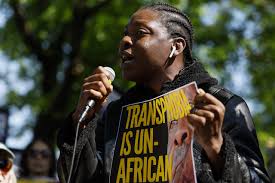
A growing alliance between US conservative Christian groups, Muslim organizations, and traditional leaders is reshaping the fight against LGBTQ rights across Africa, with Ghana emerging as a key testing ground for the movement.

The spotlight is once again on Arizona-based Family Watch International, a conservative Christian organization led by Sharon Slater, after it helped organize the 4th African Inter-Parliamentary Conference on Family and Sovereignty in Accra, Ghana. Rights advocates say the conference has become a major platform for promoting anti-LGBTQ legislation across the continent.
The gathering comes just days after Ghana’s parliament passed a controversial anti-LGBTQ bill that includes prison terms of up to 10 years for individuals accused of promoting LGBTQ activities. The legislation, which still awaits presidential approval, has received support from major Christian and Muslim religious bodies in the country.
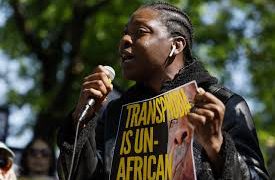
While the influence of US evangelical groups on anti-LGBTQ campaigns in Africa has been widely documented, analysts are increasingly focusing on a broader coalition that brings together Christian, Muslim, and traditional religious institutions under the banner of “family values.”
In Ghana, this model was formalized in 2013 through the National Coalition for Proper Human Sexual Rights and Family Values, founded by lawyer and anti-LGBTQ activist Moses Foh-Amoaning. The coalition united Christian, Muslim, and traditional leaders into a single political force, helping drive campaigns against LGBTQ rights and supporting legislation that recently passed parliament.
Supporters of the movement argue that it protects cultural and religious values, while critics contend that the “family values” framework serves as a political tool that allows groups with vastly different religious beliefs to unite against LGBTQ rights.
The strategy has expanded beyond predominantly Christian nations such as Ghana and Uganda into Muslim-majority countries including Senegal, Burkina Faso, and Mali, all of which have recently introduced or strengthened anti-LGBTQ laws.
Reports have also linked US-based conservative groups to advocacy efforts in several African countries, highlighting an increasingly coordinated international campaign. Observers say the movement’s growing influence reflects a shift from isolated religious activism to a continent-wide coalition capable of shaping legislation and public policy.
As delegates gather in Accra this week, attention is focused on a proposed African Charter on Family Values and Sovereignty, a framework supporters hope will be adopted across multiple African nations. Critics, however, argue that the initiative seeks to impose a single definition of “African values” on a continent marked by diverse cultures, religions, and legal systems.
For supporters and opponents alike, the conference underscores how the debate over LGBTQ rights in Africa has evolved into a broader struggle over religion, culture, and political influence across the continent.#newsafro_