










A diplomatic dispute is unfolding as the United States Congress deliberates on a bill proposing wide-ranging sanctions against twelve northern Nigerian governors, prominent traditional rulers, and senior members of the judiciary for alleged complicity in what American legislators have termed “a Christian genocide” and systemic violations of religious freedom under Nigeria’s Sharia and blasphemy laws.

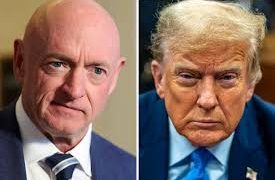
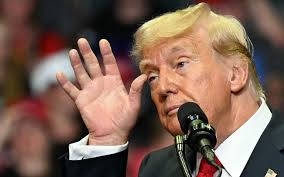
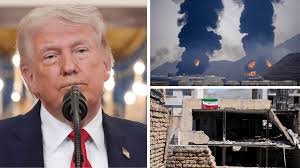
The development follows the recent designation of Nigeria as a Country of Particular Concern (CPC) by U.S. President Donald Trump, who has directed the Secretary of State, Marco Rubio, to take immediate action.
In a post on Truth Social, President Trump lamented the alleged killing of thousands of Christians in Nigeria and instructed Congressman Riley Moore, Chairman Tom Cole, and the House Appropriations Committee to investigate and report on the matter.
Proposed Legislation
The Nigeria Religious Freedom Accountability Act of 2025, sponsored by Senator Ted Cruz, designates Nigeria as a CPC under the International Religious Freedom Act. The bill seeks to impose targeted sanctions — including visa restrictions, asset freezes, and financial prohibitions — against public officials and religious authorities accused of enforcing or tolerating violence against Christians and other religious minorities.
Pursuant to the bill, introduced on 9 September 2025, the U.S. Secretary of State would be required, within ninety (90) days of its enactment, to submit to Congress a list of Nigerian officials alleged to have “promoted, enacted, or maintained blasphemy laws” or “tolerated violence by non-state actors invoking religious justification.”
Such sanctions would be implemented under Executive Order 13818, which operationalizes the Global Magnitsky Human Rights Accountability Act.
Background on Sharia Implementation
The bill highlights the expansion of Sharia law in northern Nigeria between 1999 and 2000 — beginning with Zamfara State under Governor Ahmad Sani Yerima — as a turning point in the alleged institutionalization of religious persecution. Within two years, twelve northern states, including Kano, Sokoto, Katsina, and Bauchi, had adopted Sharia-based penal codes.
While the Federal Government maintains that Sharia jurisdiction applies only to Muslims and operates within constitutional safeguards, the U.S. bill asserts that these provisions have enabled persecution and violence against Christians and religious minorities.
Federal Government Response
In a policy memorandum titled “Nigeria’s Constitutional Commitment to Religious Freedom and Rule of Law,” the Federal Ministry of Foreign Affairs rejected the allegations as “legally and factually unfounded.” The document reaffirmed that:
Nigeria is a constitutional democracy prohibiting the adoption of any state religion (Section 10, 1999 Constitution as amended);
Freedom of thought, conscience, and religion is guaranteed under Section 38; and
Discrimination on religious grounds is prohibited under Section 42.
The statement clarified that Sharia law applies solely to Muslims who voluntarily submit to its jurisdiction and that no federal law prescribes blasphemy as a criminal offence.
The Government maintained that alleged religious violence is often rooted in terrorism, organized crime, and communal conflict rather than state-sanctioned persecution.
Presidency’s Diplomatic Response
Presidential Adviser on Policy Communication, Daniel Bwala, disclosed that President Bola Tinubu is scheduled to meet President Trump to discuss counter-terrorism cooperation and address perceived misconceptions regarding Nigeria’s internal security challenges.
Bwala noted that both leaders share an interest in combating global terrorism and would use the meeting to clarify that terrorism in Nigeria targets citizens irrespective of faith.
Special Adviser on Information and Strategy, Bayo Onanuga, further stated that President Tinubu had anticipated attempts to distort Nigeria’s image internationally and had already directed the nation’s service chiefs to adopt a proactive security approach.
Diplomatic and Expert Reactions
Retired ambassadors and foreign policy experts warned that the proposed CPC designation could severely impact bilateral relations, curtail U.S. development assistance, and restrict access to military hardware critical for Nigeria’s counterterrorism efforts.
Ambassador Mohammed Mabdul cautioned that the designation might reduce socioeconomic aid and impede intelligence cooperation, while Ambassador Ogbole Amedu-Ode urged the government to treat the matter as a wake-up call to strengthen domestic accountability and human rights protections.
Ambassador Godknows Igali advised that Nigeria pursue quiet diplomacy through friendly intermediary nations, noting that global powers often advance their strategic interests under the guise of human rights advocacy.
Foreign policy analyst Charles Onunaiju described the U.S. stance as a continuation of a historically adversarial posture toward Nigeria, warning that the CPC designation could deter foreign investment and diminish Nigeria’s standing within international organizations.
Domestic Reactions
Former Kano State Governor and 2023 NNPP presidential candidate, Senator Rabi’u Kwankwaso, urged the U.S. to provide technological assistance rather than punitive measures, advocating for strategic cooperation to combat insecurity nationwide.
The Christian Association of Nigeria (CAN), through its Northern Chairman, Rev. John Hayab, acknowledged persistent attacks on Christians but urged the Federal Government to act decisively against perpetrators to forestall foreign intervention.
Conversely, the Muslim Rights Concern (MURIC), led by Prof. Ishaq Akintola, interpreted Trump’s remarks as a declaration against terrorist groups rather than Muslims, urging calm and diplomatic engagement.
Potential Sanctions Framework
Under Section 3 of the proposed bill, titled “Designations and Amendments Related to the International Religious Freedom Act,” the U.S. Secretary of State would formally designate:
The Federal Republic of Nigeria as a Country of Particular Concern; and
Boko Haram and ISIS-West Africa as Entities of Particular Concern for engaging in or tolerating egregious violations of religious freedom.
Warnings from Legal Experts
Peoples Democratic Party chieftain, Segun Showunmi, warned that simultaneous invocation of the CPC designation and Global Magnitsky Act could have catastrophic implications for Nigeria’s political class, stating:
“The CPC designation targets the State; the Magnitsky Act targets individuals. One says ‘your government is guilty,’ the other says ‘you personally will pay.’”
He cautioned that these mechanisms, if triggered, would isolate Nigeria diplomatically and economically, as Western allies are unlikely to intervene in Nigeria’s defence.#newsafro_