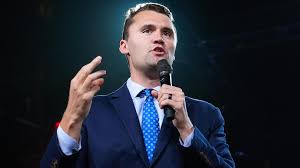
Nigerian public opinion remains sharply divided over the assassination of American conservative activist, Charlie Kirk.
On one side, a number of Nigerian pastors and gospel musicians have eulogized Kirk, describing him as a man of courage and conviction whose death constitutes a grievous loss to the global Christian community. Renowned gospel singer Nathaniel Bassey lamented the killing as “painful,” while fellow singer Victoria Orenze hailed him as a “true soldier of Christ” and urged Christians to regard his passing as a call to spiritual vigilance. Pastor Blessed Uzochikwa, husband of Mercy Chinwo, likewise praised Kirk’s unwavering commitment to his beliefs, notwithstanding the opposition he often faced.
Conversely, other Nigerians have condemned the laudatory tributes, accusing religious leaders of hypocrisy and misplaced priorities. Critics argue that many of the same clerics have remained silent in the face of persistent violence and mass killings within Nigeria, yet have publicly mourned an American figure accused of promoting divisive rhetoric on race, religion, and society.
Kirk, aged thirty-one, was fatally shot in the neck on 10 September 2025 while addressing an audience at Utah Valley University in Orem, Utah. The incident occurred during the first event of his planned nationwide “comeback tour” organized by Turning Point USA, an organization he co-founded. The assailant, identified as Tyler Robinson, attacked while Kirk was speaking on the issue of mass shootings in the United States.
Throughout his career, Kirk was a highly polarizing figure. He was criticized for remarks perceived as racially derogatory — such as questioning the qualifications of Black professionals — and for describing Islam, Marxism, and so-called “wokeism” as existential threats to Christianity and Western civilization.
Reactions in Nigeria have ranged from overt support to outright hostility. Oxford Union president-elect George Abaraonye, a British-Nigerian, attracted censure after mocking Kirk’s death online, comments which the Union swiftly disavowed. Nigerian writer Ikhide Ikheloa denounced Kirk as a beneficiary of “white American privilege” and “a bigot,” though he stressed that, despite his views, Kirk did not deserve a violent death. Meanwhile, various social media commentators have accused Nigerian pastors of exhibiting selective empathy — mourning Kirk abroad while ignoring the plight of Nigerian Christians killed by terrorists and bandits at home.
Thus, while Kirk’s death has provoked mourning among some Nigerian Christians who viewed him as a defender of their faith, it has also reignited debates about hypocrisy, race, Western validation, and the responsibilities of religious leadership in addressing domestic suffering.#newsafro_