
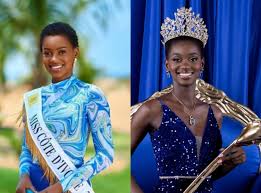
The Miss Côte d’Ivoire pageant’s decision to ban wigs and weaves is a powerful statement about authenticity and the celebration of natural beauty. By encouraging contestants to embrace their true selves and showcase their natural hair, the pageant is promoting self-confidence and challenging traditional beauty standards that often prioritize artificial enhancements. This shift could inspire many to feel more comfortable with their own natural features and may encourage broader discussions on the impact of beauty standards on self-image, especially in the context of African beauty ideals.
It’s interesting to see pageants evolve in this way. It reflects a growing movement towards more inclusive and empowering beauty ideals, where women are celebrated for who they truly are, rather than how closely they fit a prescribed image.
The move by Miss Côte d’Ivoire to ban wigs and weaves is indeed a historic moment, especially considering how deeply beauty pageants have been intertwined with Western standards of beauty. By prioritizing natural hair, the pageant is pushing forward a conversation about African beauty and the unique ways it can be celebrated. The change, influenced by Marlene Kouassi’s 2022 participation with her short hair, is a strong statement about embracing authenticity in a world where women’s beauty is often subject to external standards and expectations.
It’s not surprising that this decision has sparked mixed reactions. Some see it as a bold step towards setting new beauty standards that are more in line with African identity, while others argue that it could inadvertently pressure women to conform to a different set of norms. There’s always that fine line between empowerment and restriction in any movement, but it seems like Miss Côte d’Ivoire is trying to challenge one standard while creating space for another that is more true to the contestants’ roots.
The adjustments to the minimum height and age limits are also significant, making the competition more accessible to a wider range of women, which could reflect a more inclusive and modern approach to pageants in general.
With the crowning scheduled for June 26, 2025, it will be interesting to see how this change shapes the contestants and the perception of beauty pageants across Africa.#newsafro_