
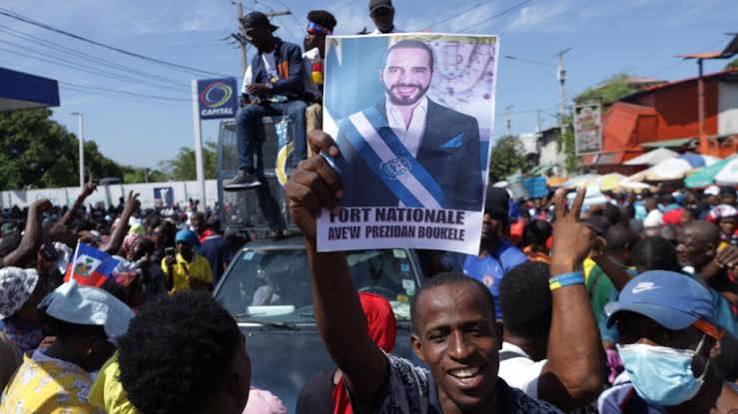
Thousands of Haitians took to the streets of Port-au-Prince and other areas on Tuesday to express support for El Salvador’s President Nayib Bukele and his troops as they step up efforts to combat powerful gangs in the violence-hit Caribbean nation.
Demonstrators waved Haitian flags, raised their fists and carried placards praising Bukele, with some calling on him to help restore security and liberate communities from gang control.
Chants of “Bukele is here to free us!” echoed through the crowds, while others demanded the deployment of more security equipment, including explosive drones and robotic dogs.
Some protesters described the Salvadoran leader as a symbol of hope after years of gang violence, killings and displacement.
One demonstrator, Maxseau Lomba, praised Bukele, saying gangs had destroyed homes and taken innocent lives, forcing residents to flee their communities.
Last month, Bukele deployed approximately 2,500 Salvadoran troops to Haiti following an October 18 attack in which four Salvadoran personnel went missing. Since their deployment, clashes between gangs and foreign forces supporting Haitian authorities have intensified.
Haiti’s security operations currently involve local police and military personnel, a UN-backed gang suppression force, self-appointed vigilante groups and Vectus Global, a private security company founded by former US Navy SEAL Erik Prince.
Despite the growing international intervention, Haiti continues to face a severe security crisis, with more than 20,000 people reportedly killed over the past five years.
However, security experts have warned that military operations alone may not provide a lasting solution to the country’s gang problem.
The International Crisis Group, in a report based on more than 100 interviews with officials in Haiti and abroad, criticized the authorities for lacking a coordinated strategy to address security threats and achieve sustainable peace.
The organization cautioned that the current foreign mission could weaken criminal gangs without completely dismantling their networks, leaving Haiti vulnerable once international forces withdraw.
Diego Da Rin, an analyst with the International Crisis Group, warned that the public enthusiasm surrounding Bukele’s intervention could eventually turn into anger against the Haitian government if foreign troops leave without a sustainable security arrangement.
The report urged Haitian authorities to begin preparing their own security institutions to take full responsibility for national stability after international forces depart.
Meanwhile, Tuesday’s demonstration was disrupted when police fired tear gas to disperse protesters attempting to reach the recently reopened Sylvio Cator Stadium.
The growing public support for Bukele highlights the desperation of many Haitians for decisive action against gangs, even as questions remain about the country’s long-term security strategy.#newsafro_