
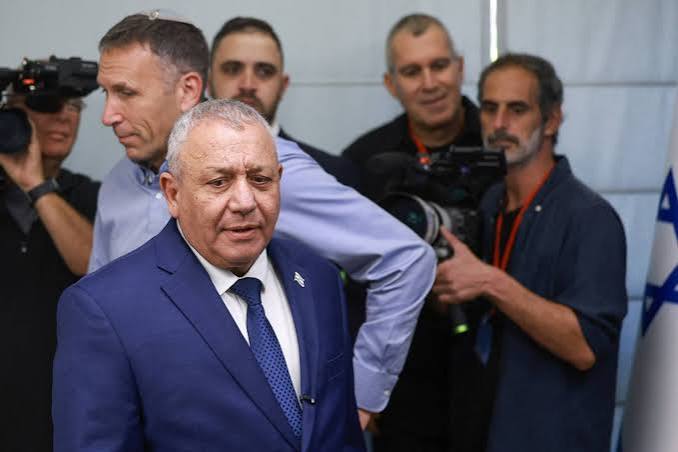
Israel’s parliament has elected Matan Kahana as its new speaker, marking a significant political development as opposition parties move to challenge policies introduced by outgoing Prime Minister Benjamin Netanyahu’s government.
Kahana, an ally of Gadi Eisenkot, who is currently working to form a new coalition government, replaces Amir Ohana, a close Netanyahu ally. His election is seen as an important step towards advancing the opposition’s legislative agenda.
Kahana secured 66 votes in the 120-member Knesset, with support from Jewish-led opposition parties and Arab-led political groups. His rival, Ofir Katz, who was backed by Netanyahu’s bloc, received 52 votes after a heated parliamentary debate lasting more than seven hours.
In his acceptance remarks, Kahana called for unity, mutual respect and an inclusive parliament, stressing that the Knesset must represent all Israeli citizens regardless of their political positions.
The leadership change follows the October 27 parliamentary elections, in which Netanyahu and his allies lost their majority. Israel’s president subsequently tasked Eisenkot with attempting to form a new coalition government to replace Netanyahu.
However, Kahana’s election, which depended partly on support from Arab-led parties, sparked criticism from Netanyahu’s supporters and far-right politicians.
Members of the Likud party and Otzma Yehudit accused the opposition of relying on Arab lawmakers whom they described as hostile to Israel’s interests. Their comments drew strong criticism from opposition figures, who defended the legitimacy of Arab representation in parliament.
Eisenkot, meanwhile, maintained that all Israeli citizens deserve equal representation, warning against political rhetoric that divides the population into first-class and second-class citizens.
Ahmed Tibi, leader of the Arab Joint List Party, also defended the decision to support Kahana, accusing Netanyahu’s allies of hypocrisy for previously seeking Arab lawmakers’ support when it suited their political interests.
Opposition Plans Legislative Changes
With up to five weeks remaining to secure the necessary alliances for a coalition government, Eisenkot’s bloc is already preparing to advance several legislative proposals.
Among the proposed measures are introducing term limits for the prime minister, establishing a government-led inquiry into the October 7, 2023 Hamas-led attacks, and reversing legislation aimed at restricting the powers of the judiciary.
The election of Kahana as Knesset speaker gives the opposition and its Arab-led allies a stronger parliamentary position as negotiations continue over the formation of Israel’s next government.#newsafro_