
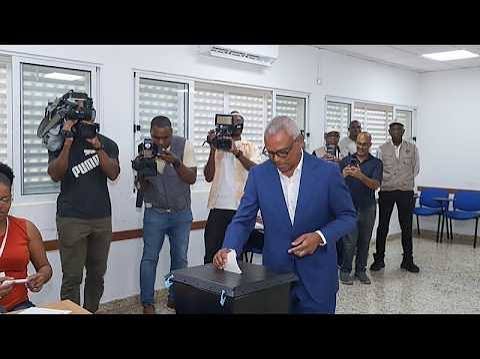
Cape Verde’s President, José Maria Neves, is set for another term in office after securing nearly 64 per cent of the votes, with 98 per cent of ballots counted in Sunday’s presidential election.
Neves, who declared victory on Sunday evening, pledged to promote national unity and build cross-party cooperation to address the country’s major challenges, particularly housing, healthcare, education and job creation.
Addressing supporters after the projected victory, the president reaffirmed his commitment to governing for all Cape Verdeans, regardless of their political affiliations or social backgrounds. He also promised to strengthen unity among citizens both within the islands and across the diaspora.
Official figures indicate that voter turnout stood at approximately 32 per cent of more than 400,000 registered voters.
Joana Rosa, who made history as Cape Verde’s first female presidential candidate, finished second with 31.5 per cent of the votes.
A Strong Democratic Tradition
The West African island nation has earned recognition for its competitive elections, peaceful transfers of power and relatively stable democratic institutions. Its political system is often regarded as an example of democratic governance in Africa.
Neves’ victory follows the African Party for the Independence of Cape Verde (PAICV), which supports his presidency, securing a parliamentary majority in May. The victory ended a decade-long period of government by the opposition Movement for Democracy.
Under Cape Verde’s parliamentary system, the prime minister exercises most executive powers and directs government policy, while the president’s responsibilities are largely ceremonial. However, the presidency retains important constitutional powers, including the authority to veto legislation.
Neves was first elected president in 2021. Before assuming the presidency, he served as prime minister from 2001 to 2016 and previously led the PAICV. His political career has also included service as a mayor and legislator.
Economic Progress and Persistent Challenges
Cape Verde has recorded significant economic progress, particularly through tourism, which remains a major contributor to national development.
In July, the World Bank classified the country as an upper-middle-income economy, reflecting its sustained economic growth and improvements in living standards.
Despite these achievements, the country continues to face considerable socioeconomic challenges, including income inequality, geographical isolation and limited affordable transportation between its islands.
The rising cost of living, increasing fuel prices and youth unemployment remain major concerns for many citizens.
As Neves prepares for another presidential term, expectations will center on how his administration can encourage political cooperation, sustain economic growth and address the everyday challenges confronting Cape Verdeans.#newsafro_