
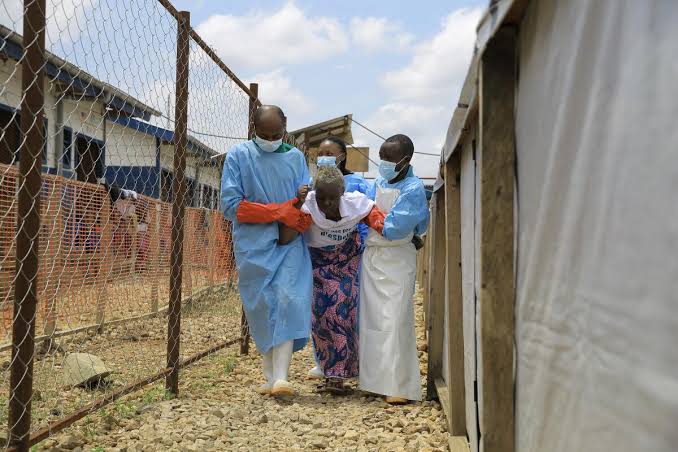
The Ebola outbreak in the Democratic Republic of Congo (DRC) has claimed more than 5,000 lives, raising fresh concerns about the virus spreading to other African countries.
Latest figures from the Congolese Ministry of Health show that 5,026 people have died out of 10,351 recorded infections, representing a fatality rate of nearly 50%. Meanwhile, 2,788 patients have recovered.
The outbreak, caused by the Bundibugyo strain of Ebola, was declared in mid-May and has become the second-deadliest Ebola outbreak in history, behind the devastating 2014–2016 West African epidemic, which killed approximately 11,000 people.
The World Health Organization (WHO) has described the latest death toll as a tragic milestone, warning that thousands of families and communities have been devastated by the disease.
The virus has spread across 67 health zones in eight of Congo’s 26 provinces, with eastern regions, particularly Ituri and North Kivu, accounting for most infections and deaths.
Health authorities are increasingly concerned about difficulties in tracing contacts and identifying new infections. According to the Africa Centers for Disease Control and Prevention, about 80% of new cases are emerging outside monitored transmission chains, making containment more difficult.
Another major concern is that approximately one-third of recorded deaths occurred outside treatment centers, meaning many victims died before receiving medical attention or being tested for Ebola.
Health officials warn that these gaps are allowing community transmission to continue, while the absence of an approved vaccine or specific treatment for the Bundibugyo strain makes the response even more challenging.
The worsening situation has intensified concerns over the ability of health authorities to contain the outbreak and prevent further cross-border transmission across Africa.#newsafro_