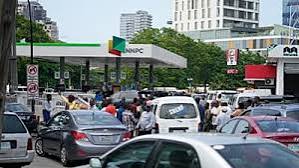
Nigeria’s government has announced measures to ease the impact of rising petrol prices on households and businesses as the country approaches its January 16 elections.
Finance Minister Taiwo Oyedele announced the initiative on Thursday, including a 30-day petrol discount through the Nigerian National Petroleum Company Limited (NNPC), with priority given to public transport operators nationwide.
Petrol prices have climbed to around ₦1,400 per liter, compared with approximately ₦830 before the recent Middle East conflict disrupted global energy markets. The increase has intensified pressure on Nigerians already struggling with rising living costs.
Oyedele said the discount was designed to provide temporary relief without reinstating the fuel subsidy removed by President Bola Tinubu in 2023. He explained that the government intended to sell petrol at cost during the initial 30-day period, although he did not disclose the exact discounted price.
Tinubu’s economic reforms, which included removing fuel subsidies and allowing the naira to float, have received support from many economists but have also contributed to higher living expenses and increased hardship across the country.
The announcement has attracted criticism from opposition politicians. The Nigeria Democratic Congress, which is fielding Peter Obi as its presidential candidate, described the measures as an attempt to reintroduce fuel subsidies indirectly.
Former Vice President Atiku Abubakar also questioned the sustainability of the relief, asking what would happen when the 30-day period expires. He has proposed a targeted, budgeted support program linked to domestically refined fuel to reduce prices for consumers.
Beyond the temporary discount, the government is considering a longer-term price moderation policy aimed at limiting the impact of fluctuations in international crude oil prices and foreign exchange rates.
According to Oyedele, the government is negotiating a petrol price ceiling of ₦1,350 per liter. Under the proposed arrangement, refiners and importers would initially absorb costs exceeding the ceiling and recover the shortfall later when market conditions improve. The ceiling would be reviewed monthly.
The initiative comes at a politically sensitive time, as fuel affordability remains a major concern for Nigerian voters. While the government maintains that its reforms are necessary for long-term economic stability, opposition figures argue that more sustainable measures are needed to reduce the cost of living.#newsafro_