
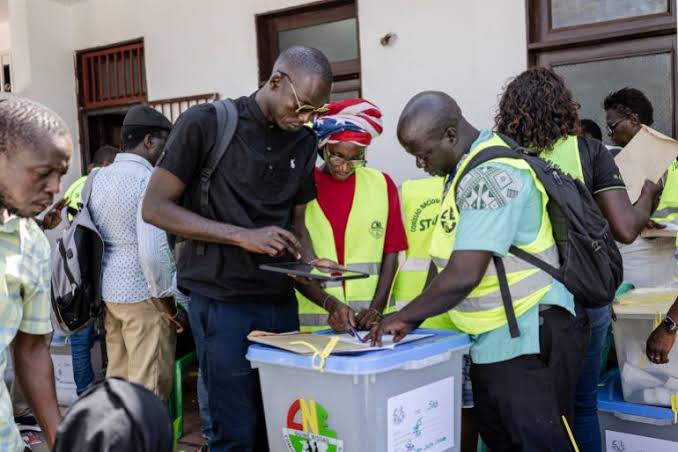
Guinea-Bissau has voted in favor of a new constitution that will give the country’s president significantly greater powers, in a major political development ahead of elections expected to restore civilian rule.
According to the National Electoral Commission, the “Yes” campaign won 70 percent of the vote in Sunday’s referendum.
The vote comes less than a year after the military seized power in a coup and just months before the December 6 presidential election.
More Powers for the President
The new constitution will significantly change how Guinea-Bissau is governed.
Under the proposed system, the president will be able to appoint and dismiss the prime minister and members of government, as well as dissolve parliament. The prime minister will also no longer have to come from the parliamentary majority.
The military junta says the reforms are necessary to strengthen state institutions and create greater stability before power is handed back to an elected civilian government.
However, the constitutional changes have sparked strong opposition from political groups and civil society organizations, with critics arguing that an unelected transitional government should not be rewriting the country’s constitution.
The opposition had called for a boycott of the referendum, citing restrictions on public freedoms and concerns about the political environment.
A Country With a History of Coups
Guinea-Bissau has struggled with political instability for decades. The military took control last November, overthrowing then-President Umaro Sissoco Embalo just days after a presidential election and suspending the electoral process.
Transitional President General Horta N’Tam, who is barred from contesting the upcoming election under the transitional charter, urged citizens—particularly young people—to participate in the referendum.
Although electoral officials described the vote as transparent and credible, turnout appeared relatively low and sporadic at several polling stations.
The final referendum results are expected to be confirmed by the Supreme Court in the coming days.
With the December election approaching, Guinea-Bissau now faces a crucial test: whether the new constitutional framework will help restore political stability or further concentrate power in the presidency.
The country has experienced five coups and several attempted coups since gaining independence from Portugal in 1974, making the return to civilian rule a closely watched moment for its fragile democracy.#newsafro_