
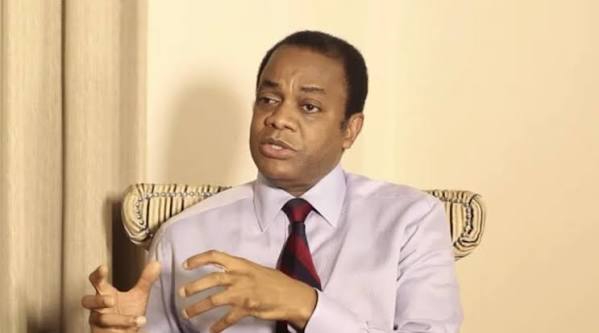
Former Cross River State Governor Donald Duke has questioned the Federal Government’s decision to proceed with the multi-billion-dollar Lagos-Calabar Coastal Highway, arguing that Nigeria’s current economic realities make the ambitious project difficult to justify.
Speaking during an interview on Arise TV’s Prime Time, Duke said the country should prioritize repairing existing roads and investing in critical sectors such as electricity, healthcare, and education instead of embarking on an expensive new coastal highway.
According to him, Nigeria already has a road connecting Lagos to Calabar, and government resources would be better spent rehabilitating that route than constructing a new one.
“Nigeria cannot afford the Lagos-Calabar Coastal Highway. I don’t think the road will go beyond Epe,” Duke said. “There is already a road from Lagos to Calabar. If the road is poor, fix it.”
The former governor also expressed doubts about the feasibility of the project, particularly through the swampy terrain of the Niger Delta. He noted that building the highway across areas such as Bayelsa State would require numerous bridges, significantly increasing construction costs.
Duke argued that government spending should reflect the country’s most urgent needs rather than large-scale projects that place additional pressure on public finances.
He maintained that the billions earmarked for the coastal highway could have a greater impact if invested in improving electricity supply, upgrading healthcare facilities, and strengthening the education sector.
The former presidential candidate also criticized what he described as inadequate funding for Nigeria’s healthcare system, saying the country’s health budget falls far short of what is needed for a population of over 200 million people.
Beyond infrastructure, Duke called for reforms to Nigeria’s revenue generation system. He suggested that government should reduce its dependence on company profit taxes and explore broader, transaction-based revenue sources while ensuring public funds are directed toward projects with the greatest national impact.
On energy, Duke stressed that affordable electricity remains one of the most important drivers of economic growth. He said Nigeria possesses abundant energy resources—including gas, hydro, solar, petroleum, and lithium—but has yet to harness them effectively for the benefit of citizens and businesses.
The Lagos-Calabar Coastal Highway is a proposed 700-kilometre road linking Lagos to Cross River through several southern states. While the Federal Government says the project will boost trade, tourism, and regional connectivity, critics continue to question its cost, funding model, and whether it should take precedence over more pressing national needs.#newsafro_