
For generations, thousands of Palestinian refugees living in Egypt have struggled with legal uncertainty, limited opportunities and difficulties accessing essential public services, despite many of them having been born and raised in the country.
In Geziret Fadel, a village in Egypt’s Sharqiya province, an estimated 4,000 Palestinians live in difficult circumstances, facing obstacles in accessing education, healthcare, employment and other basic services because they are officially regarded as foreigners.
Their families trace their displacement to the 1948 Arab-Israeli war, when hundreds of thousands of Palestinians fled their homes following the establishment of Israel. Palestinians refer to the mass displacement as the Nakba, meaning catastrophe.
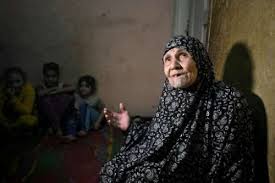
Among the oldest survivors is 90-year-old Shamma Abu Hussein, believed to be one of the last residents of the village who personally experienced life in historic Palestine.
She recalled how her family fled Beersheba in southern Israel amid violence, with children carried on camels into the desert. The journey to Egypt lasted several days, during which they struggled without food and water and lost her mother.
Having witnessed three generations of her family grow up in Egypt, Abu Hussein now fears that the ongoing war in Gaza and calls by some Israeli ministers for Palestinians to leave their homeland could lead to another wave of displacement.
While older generations continue to remember their ancestral homeland, younger residents are increasingly concerned about education, employment and securing a stable future.
For 63-year-old agricultural laborer Selmi Soliman al-Namouli, the contradiction is particularly painful. Although he, his father and his children were all born in Egypt, he says authorities continue to treat him as a foreign national.
He explained that the cost of renewing residency permits, paying school fees and meeting other administrative requirements has placed considerable pressure on his family. The financial burden prevented his academically gifted daughter, Asmaa, from attending university.
His 25-year-old nephew, Farid Khaled al-Namouli, also abandoned his educational ambitions after encountering repeated difficulties with documentation. He now works in a clothing shop in the village.
According to Palestinian refugee rights organization BADIL, similar challenges affect Palestinians across Egypt. Researchers estimate that approximately 50,000 Palestinians displaced by earlier conflicts were living in the country before the latest Gaza war, with more than 100,000 additional arrivals since the conflict began.
Egyptian authorities have maintained that the country provides medical care and educational opportunities to Palestinian refugees while firmly opposing any permanent displacement of Palestinians from their homeland.
However, the situation was different under former Egyptian President Gamal Abdel Nasser, when Palestinians enjoyed relatively favorable access to education and employment.
Restrictions became tighter following Egypt’s 1978 peace treaty with Israel and the 1978 assassination of Culture Minister Yusuf Sibai by the Palestinian militant group Abu Nidal.
Unlike Jordan, Syria and Lebanon, where the United Nations Relief and Works Agency for Palestine Refugees (UNRWA) provides educational services, the agency has never operated in Egypt.
Oxford University emeritus professor of anthropology and forced migration Dawn Chatty noted that education had historically provided Palestinian refugees elsewhere in the region with opportunities to secure employment abroad and support their families through remittances.
In Egypt, however, the absence of similar opportunities has left many families struggling to improve their circumstances.
Successive Egyptian governments have also resisted granting Palestinians citizenship, arguing that naturalization could weaken their internationally recognized right to return to their ancestral homeland.
For residents of Geziret Fadel, the struggle is therefore not only about preserving their Palestinian identity and historical connections but also about securing basic rights, educational opportunities and a more stable future for generations born in Egypt.#newsafro_