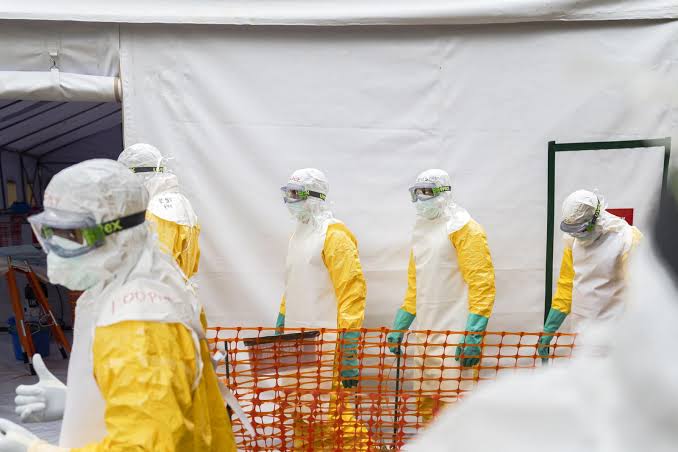
The Democratic Republic of Congo (DRC) is battling its worst-ever Ebola outbreak, with confirmed infections rising to 11,042 and deaths reaching 5,387, according to figures released by the country’s National Institute of Public Health.
The outbreak, officially declared in May, is the 17th recorded in the DRC. However, health experts believe the virus may have been circulating weeks or even months before its formal announcement.
Approximately 2,990 people have recovered from the disease, which spreads through direct contact with infected bodily fluids and can cause severe hemorrhagic fever.
The outbreak began in northeastern Ituri province before spreading to seven other provinces, with Ituri and North Kivu recording the highest number of cases. Infections have also been reported in Uganda, Kenya and Nigeria.
The current outbreak is caused by the Bundibugyo strain of Ebola, for which there are currently no approved vaccines or specific treatments.
Last month, the World Health Organization (WHO) announced plans to conduct human trials of the Ervebo vaccine, originally approved for the Zaire strain, to determine whether it offers protection against Bundibugyo.
Meanwhile, escalating insecurity in eastern DRC is making efforts to contain the outbreak increasingly difficult.
In Ituri province, clashes between armed groups and attacks on healthcare workers have disrupted medical operations. On Sunday, youths reportedly set fire to an Ebola treatment center in Lolwa.
The United Nations also reported that clashes between local militias temporarily halted the health response in Fataki.
Deadly attacks by Islamic State-linked Allied Democratic Forces (ADF) rebels have further heightened insecurity across Ituri, Haut-Uele and North Kivu, according to local and security sources.
The deteriorating security situation is complicating efforts by health authorities to contain the virus, protect medical personnel and provide treatment to affected communities.#newsafro_