
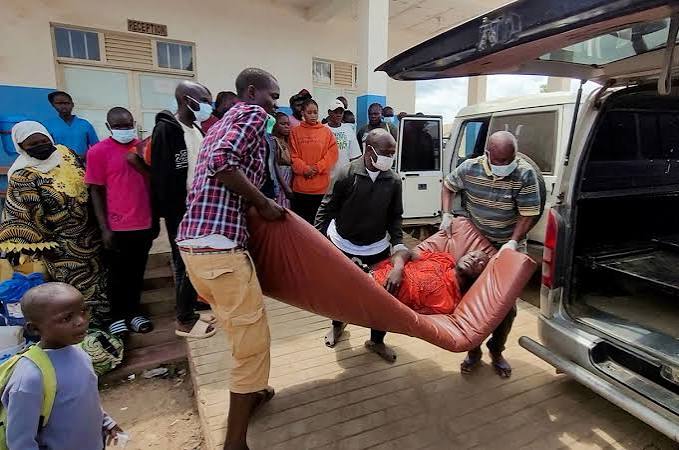
The Ebola outbreak in the Democratic Republic of Congo (DR Congo) continues to worsen, with confirmed cases exceeding 9,000 and deaths surpassing 4,300.
Health authorities are struggling to contain the epidemic, which has spread across seven provinces, with several hotspots continuing to record new infections.
The World Health Organization (WHO) is particularly concerned that many patients are dying in their communities before they can be identified and taken to treatment centers.
Dr Catherine Swallwood, the WHO’s incident manager in DR Congo, said community deaths account for a significant proportion of the outbreaks fatalities. According to her, about one-third of new cases reported in recent weeks involved people who died in their communities.
“This means we are not detecting cases while the patients are still alive,” Swallwood said.
The high number of undetected infections has prompted the WHO to focus more on remote communities and health zones that are difficult for medical teams to access.
Swallwood said the response strategy is shifting towards reaching the hardest-hit communities directly, where people are becoming ill and dying without timely access to medical services.
The WHO aims to establish response services in these areas to improve early detection, support patients and limit further transmission.
The outbreak involves the rare Bundibugyo strain of the Ebola virus, which has an overall case fatality rate of 48.3 per cent. No vaccine or treatment has yet received specific approval for this strain, although clinical trials are underway.
Health officials continue to face the challenge of identifying cases early and bringing lifesaving care to communities where access to healthcare remains limited.#newsafro_